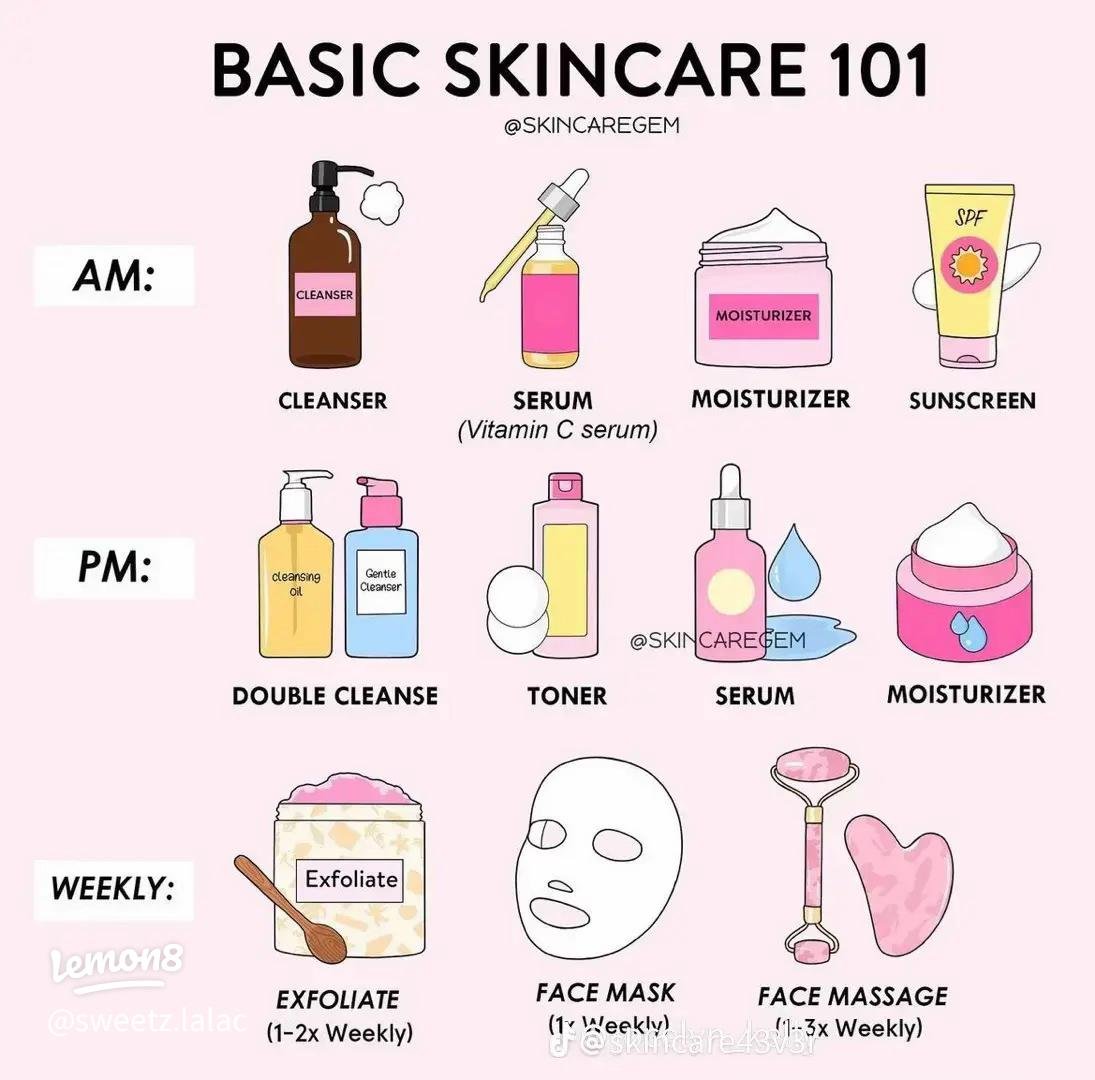
Starting a skincare routine can feel overwhelming — dozens of products, conflicting advice, and more acronyms (AHA, BHA, SPF) than you can keep track of. But here’s the truth: a good daily skincare routine for beginners doesn’t need to be complicated. In fact, the simpler, the better.
Whether you’re brand new to skincare or finally ready to be consistent, this guide breaks everything down into easy, manageable steps that actually work.
Why a Daily Skincare Routine Matters
Your skin is the body’s largest organ, and like everything else, it responds to consistency. A daily routine helps:
- Protect your skin from environmental damage (sun, pollution, free radicals)
- Maintain hydration and a healthy skin barrier
- Prevent premature aging, breakouts, and uneven tone
- Treat specific concerns like acne, dryness, or hyperpigmentation over time
The key word is daily. Results don’t come from one miraculous product — they come from showing up for your skin every morning and every night.
Before You Start: Know Your Skin Type
Choosing the right products begins with understanding your skin. The five main skin types are:
- Normal — Balanced, not too oily or dry
- Oily — Shiny, enlarged pores, prone to breakouts
- Dry — Tight, flaky, or rough texture
- Combination — Oily in the T-zone (forehead, nose, chin), dry elsewhere
- Sensitive — Easily irritated, prone to redness or reactions
When in doubt, start with gentle, fragrance-free products labeled for “all skin types” or “sensitive skin.” You can always build from there.
The Morning Skincare Routine for Beginners
Your morning routine is all about protection — shielding your skin from the day ahead.
Step 1: Cleanser
Start with a gentle face wash to remove sweat, oil, and any overnight products. You don’t need anything harsh — a mild, pH-balanced cleanser is ideal.
- Oily/Combination skin: Gel or foaming cleanser
- Dry/Sensitive skin: Cream or hydrating cleanser
Pro tip: If your skin isn’t very oily in the morning, you can simply rinse with lukewarm water and skip the cleanser until your evening routine.
Step 2: Toner (Optional but Beneficial)
Toners have come a long way from the harsh, alcohol-based formulas of the past. Modern toners hydrate, balance your skin’s pH, and prep it to absorb the products that follow.
Look for toners with ingredients like:
- Hyaluronic acid for hydration
- Niacinamide for pore minimizing and brightness
- Rose water for soothing sensitive skin
Apply with clean hands or a cotton pad, patting gently into the skin.
Step 3: Moisturizer
Even if your skin feels oily, moisturizer is non-negotiable. Skipping it can cause your skin to overproduce oil to compensate for the lack of hydration.
- Oily skin: Lightweight, oil-free gel moisturizer
- Dry skin: Rich cream with ceramides or shea butter
- Normal/Combination: A balanced lotion works well
Apply while your skin is still slightly damp from toner to lock in moisture.
Step 4: Sunscreen (The Most Important Step)
If there’s one product worth investing in, it’s SPF. Sun damage is the leading cause of premature aging, dark spots, and skin cancer — and it happens even on cloudy days.
- Use at least SPF 30, broad-spectrum (UVA + UVB protection)
- Apply it as the last step of your morning routine
- Reapply every two hours if you’re spending time outdoors
Chemical vs. mineral sunscreen: Chemical sunscreens absorb UV rays and tend to feel lighter on the skin. Mineral sunscreens (zinc oxide, titanium dioxide) sit on top and reflect rays — great for sensitive skin.
The Evening Skincare Routine for Beginners
Your nighttime routine is about repair and renewal — giving your skin what it needs to recover while you sleep.
Step 1: Double Cleanse (Especially If You Wear Makeup or SPF)
Double cleansing means cleansing twice:
- First cleanse: An oil-based cleanser or micellar water to break down makeup, SPF, and pollution
- Second cleanse: Your regular gentle cleanser to clean the skin itself
If you don’t wear makeup or SPF, a single cleanse is perfectly fine.
Step 2: Toner
Same as the morning — use a hydrating or balancing toner to prep your skin for the next steps.
Step 3: Treatment/Serum (When You’re Ready)
Serums are concentrated formulas that target specific skin concerns. As a beginner, you don’t need to start with serums right away — but once your basic routine feels comfortable, here are great beginner-friendly options:
- Vitamin C serum (morning) — Brightening, antioxidant protection
- Niacinamide — Pore minimizing, reduces redness and dark spots
- Retinol (night only) — Anti-aging, cell turnover (start slow — once or twice a week)
- Hyaluronic acid — Deep hydration for all skin types
Always patch test a new serum on a small area of skin for a few days before applying it to your whole face.
Step 4: Eye Cream (Optional)
The skin around your eyes is thinner and more delicate than the rest of your face. A dedicated eye cream can help with puffiness, dark circles, and fine lines.
Use your ring finger to gently tap (never rub) a small amount around the orbital bone — not directly on the eyelid.
Step 5: Moisturizer
Nighttime is when your skin does its most active repair work. Use a slightly richer moisturizer than your daytime formula, or opt for a night cream with ingredients like:
- Peptides for collagen support
- Ceramides to restore the skin barrier
- Squalane for deep, non-greasy hydration
Weekly Add-Ons for Beginners
Once your daily routine feels like second nature, you can add these once or twice a week:
- Exfoliant — Removes dead skin cells for a brighter, smoother complexion. Choose chemical exfoliants (like lactic acid or glycolic acid) over harsh physical scrubs, which can cause microtears.
- Face mask — A hydrating or clay mask depending on your skin type and current concerns.
Don’t overdo it — over-exfoliating is one of the most common beginner mistakes.
Beginner Skincare Mistakes to Avoid
- Skipping SPF — The single biggest anti-aging mistake you can make
- Using too many products at once — Introduce one new product at a time, waiting one to two weeks before adding another
- Expecting overnight results — Most products need four to six weeks of consistent use to show visible changes
- Touching your face — Transfers bacteria and oil, leading to breakouts
- Using hot water — It strips the skin’s natural oils; always use lukewarm water
Final Thoughts
The best daily skincare routine for beginners is the one you’ll actually stick to. Start simple, be consistent, and give products time to work before switching things up. Your skin is incredibly adaptable — and with the right care, the results will speak for themselves.
Remember: skincare is self-care. It’s five minutes in the morning and five minutes at night, just for you.