There’s a reason luxury fashion houses have long drawn inspiration from the stable. Hermès built an empire on it. Ralph Lauren built an aesthetic. And now, as equestrian style gallops back into mainstream consciousness, PE saddlery — the specialized craft of making and fitting riding equipment — is commanding serious attention from fashion lovers who’ve never sat on a horse in their lives.
What Is PE Saddlery?
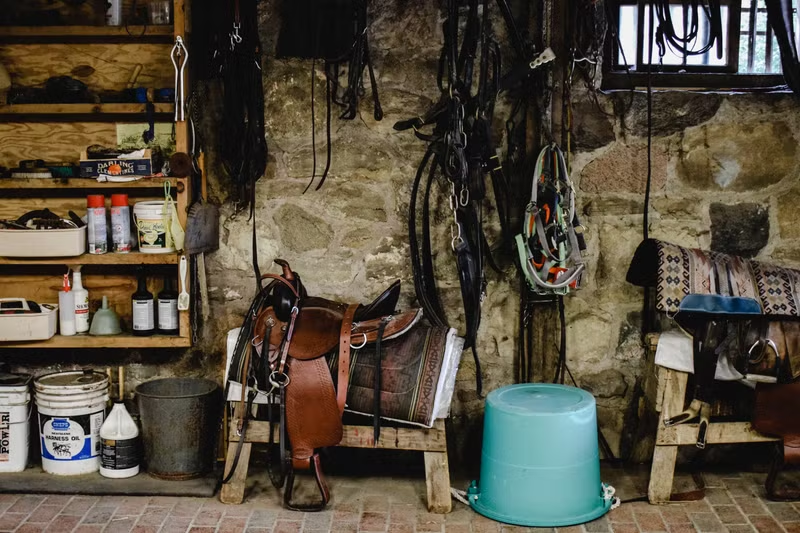
PE saddlery refers to the professional practice of designing, crafting, fitting, and repairing equestrian leather goods — most notably saddles, bridles, stirrup leathers, and girths. A skilled saddler combines deep knowledge of horse anatomy with master-level leather craftsmanship. The result is functional art: objects made to withstand extreme pressure and movement while remaining supremely elegant.
Physical Education (PE) equestrian programs and professional riding schools depend on high-quality saddlery for both safety and performance. But the precision and artisanship behind PE saddlery has caught the eye of the fashion world in a big way.
The Fashion World’s Love Affair With Equestrian Craft
Look at any luxury accessories brand and you’ll find saddlery DNA embedded in the design. The stitching patterns used on saddles — strong, even, hand-finished — are the same techniques applied to designer handbags. The bridle leather used in PE saddlery, known for its density, smooth finish, and durability, is one of the most coveted leathers in high fashion.
This season’s runways doubled down on the equestrian aesthetic: tailored riding jackets, polished leather totes with saddle-stitch detailing, chelsea boots with spur-inspired hardware, and belts that echo bridle designs. The visual language of PE saddlery is everywhere, even if the average consumer doesn’t know it by name.
The Materials That Define PE Saddlery
Bridle Leather: Treated with tallow and wax, bridle leather is firm, water-resistant, and develops a rich patina over time. In fashion, this translates to bags and belts that only get better with age — a key selling point for conscious consumers investing in lasting pieces.
Suede and Rough-Out Leather: Used on saddle seats for grip, this textured leather has made its way into fashion as a luxurious, tactile material for bags, jackets, and accessories.
Stirrup Leathers: The precision cutting and reinforcement techniques used in making stirrup leathers have influenced structured bag straps and watch bands in the luxury accessories market.
PE Saddlery and Sustainability in Fashion
One of the most compelling reasons fashion is turning toward saddlery-inspired craftsmanship is longevity. PE saddlery items are built to last decades — sometimes generations. A well-made saddle, properly cared for, can outlive its owner. This philosophy aligns perfectly with the slow fashion movement: buy less, buy better, make it last.
Several sustainable fashion brands are now collaborating with master saddlers to create accessories using traditional saddlery techniques — hand-stitching, vegetable tanning, hand-burnished edges — as an alternative to fast fashion’s disposable accessories.
How to Wear the Saddlery Trend
You don’t need to ride horses to wear this trend with conviction. Here’s how to incorporate PE saddlery-inspired fashion into your wardrobe:
The Belt: A wide, structured leather belt with clean stitching and a solid brass buckle is the simplest nod to saddlery craft. Wear it over a blazer or tucked-in shirt for instant polish.
The Tote: Look for bags with saddle-stitch detailing, D-ring hardware, and vegetable-tanned leather — all hallmarks of saddlery construction. These are the fashion items that will outlast trends.
The Boot: A Chelsea boot or a knee-high riding boot in polished leather with minimal hardware is pure equestrian energy. Pair with straight-leg trousers for a clean, modern look.
The Jacket: A fitted riding jacket in wool or leather, with structured shoulders and a nipped waist, is the statement piece of the saddlery-inspired wardrobe.
Where to Find Saddlery-Inspired Fashion
Heritage brands like Hermès, Mulberry, and Barbour have deep roots in equestrian culture. But smaller artisan brands and independent leather workers trained in PE saddlery are also entering the fashion space, offering bespoke accessories that carry genuine craftsmanship pedigree.
Final Thoughts
PE saddlery is more than a riding supply category — it’s a living craft tradition that has quietly shaped some of fashion’s most enduring aesthetics. Whether you’re drawn to the tactile luxury of bridle leather, the precision of saddle-stitch detailing, or the elegant durability of equestrian accessories, there’s something deeply compelling about fashion rooted in genuine craft.