How to Choose a Wedding Venue — Complete Guide for 2026
Of all the decisions that go into planning a wedding, choosing the venue is the one that shapes every other choice that follows. It determines how many people you can invite. It sets the visual tone and aesthetic of your entire day. It influences which vendors are available to you, what your florals can realistically achieve, and how your guests will feel from the moment they arrive to the moment they leave. Your venue becomes the foundation of your entire wedding experience.
Understanding how to choose a wedding venue well — with clarity about your priorities, a realistic approach to budget, and a methodical process for touring and evaluating your options — is the most valuable investment you can make in the early stages of wedding planning. This complete guide walks you through every step of that process, from the initial decisions that define your search to the contract details that protect your investment.
Step One — Establish Your Priorities Before You Search
The most common mistake couples make when beginning their venue search is starting with a Google search before establishing what actually matters most to them. The result is a disorienting flood of beautiful options with no framework for evaluating which ones genuinely serve their needs and which simply look appealing in photographs.
Before you look at a single venue listing, sit down together and establish clear answers to these four foundational questions.
How many guests are you inviting?
Guest count is the single most important filter in any venue search because it immediately eliminates the majority of available options. A venue that seats one hundred and twenty people cannot accommodate two hundred guests regardless of how beautiful it is, and a venue designed for two hundred guests will feel hollow and impersonal with eighty people in it. Know your approximate guest count — even a range of plus or minus twenty percent — before you begin touring. Every venue you look at should be able to accommodate your expected number comfortably.
What is your total wedding budget — and what portion can the venue consume?
The venue typically consumes twenty-five to thirty-five percent of your total wedding budget, making it the single largest line item. If your total wedding budget is fifty thousand dollars, the venue and its associated costs — catering, staffing, and any mandatory service packages — should ideally fall within twelve thousand to seventeen thousand dollars. Understanding this proportion before you begin touring prevents the extremely common scenario of falling in love with a venue that consumes sixty or seventy percent of the budget and leaves insufficient funds for everything else.
What aesthetic do you want?
Your venue style directly influences your stationery tone, floral direction, lighting choices, and attire. A barn venue does not easily transform into a black-tie ballroom, and an industrial warehouse requires significant decor investment to feel intimate and romantic. Spending time identifying whether you are drawn to rustic and natural, modern and minimalist, grand and formal, coastal and breezy, or intimate and garden-style before you tour means you walk into each viewing with clear aesthetic criteria rather than being overwhelmed by whatever the venue chooses to show you first.
What date or time of year do you envision?
Season and date affect venue choice significantly — not just in terms of weather and how the setting looks, but because the most popular venues in any market book well in advance for peak-season dates. Popular venues in cities often book twelve to eighteen months in advance for prime wedding weekends. Knowing whether your date is fixed or flexible opens or closes specific options immediately and shapes the urgency of your timeline.
Step Two — Understand the Different Types of Wedding Venues
The wedding venue landscape in 2026 is broader and more diverse than at any previous point in the industry’s history. Understanding the main categories and what each offers helps you identify which type genuinely suits your vision rather than defaulting to the most familiar option.
Traditional hotel ballrooms and banquet halls
Hotel ballrooms and banquet halls offer the most comprehensive all-inclusive service of any venue type. Catering, staffing, setup, accommodation, and often bar service are all handled in-house with professional teams experienced in managing large events. The trade-off is that the aesthetic is often less distinctive — the spaces are designed for flexibility rather than character, and achieving a personalised look requires significant floral and decor investment. For couples who prioritise logistics and ease over aesthetic uniqueness, hotel ballrooms remain an excellent and reliable choice.
Historic houses, estates, and manor venues
Historic properties — country houses, heritage estates, and period manor buildings — offer a distinctive combination of architectural character and formal elegance that no purpose-built venue can replicate. The existing architectural detail, the sense of history, and the often-spectacular grounds create an immediately beautiful backdrop that requires relatively little additional decoration to look extraordinary. Availability is typically limited and demand is high — these properties book early and command significant prices for peak-season dates.
Garden and outdoor venues
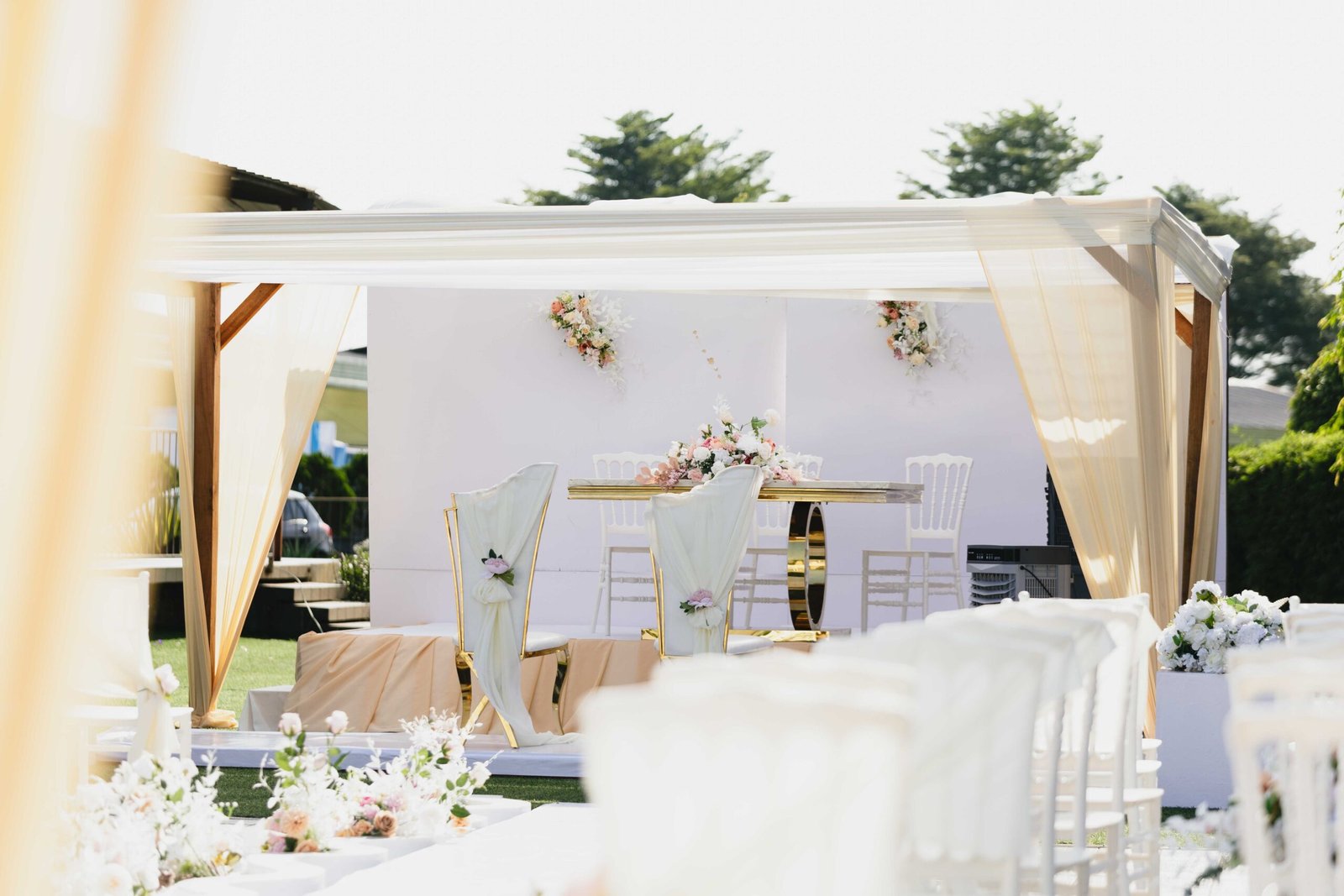
Outdoor venues — botanical gardens, estate grounds, vineyard and winery settings, and dedicated garden ceremony spaces — have grown significantly in popularity and are among the most sought-after categories in 2026. The appeal is obvious — natural light, greenery, and open-air settings create an atmosphere that no indoor space can fully replicate. The practical considerations are equally significant — weather contingency planning, ground surface management for guest mobility, sound and amplification challenges in open spaces, and the logistics of managing comfort for guests across extended outdoor periods all require careful planning and often significant additional budget.
Barns and rustic country venues
Barn venues reached peak popularity several years ago and remain consistently in demand because they offer a combination of rustic character, outdoor ceremony options, and typically generous space at price points more accessible than historic estates. The aesthetic works beautifully for relaxed, nature-inspired celebrations. Couples who want formal elegance or a modern minimalist aesthetic will find barn venues require more creative investment to achieve their desired look.
Industrial and urban spaces
Converted warehouses, industrial buildings, art galleries, and urban loft spaces offer a contemporary and distinctive aesthetic that suits modern, design-forward couples. The raw architectural elements — exposed brick, steel structures, concrete floors, double-height ceilings — create a dramatic backdrop that requires less traditional decor and more deliberate styling. Sound management and catering logistics can be more complex in these spaces than in purpose-built venues.
Destination venues
Destination weddings — at coastal resorts, vineyard estates, international properties, or remote natural settings — continue to grow in popularity in 2026 as couples prioritise the experience of the celebration over the proximity to home. The logistics of a destination wedding are significantly more complex than a local event, and the guest experience requires considerably more planning and communication. The result — an immersive multi-day celebration in a genuinely extraordinary setting — is, for many couples, worth every additional planning step.
Step Three — Set Your Budget with Realistic Clarity
Budget is where most wedding planning goes wrong — not because couples fail to set one, but because they set one without understanding how venue costs actually work and what they include.
The venue fee is rarely the total cost of the venue. Most venues charge a rental fee that covers the space itself, and then additional costs accumulate around it — catering packages, staffing charges, bar service, cake cutting fees, setup and breakdown charges, and mandatory gratuities. Before comparing venues on price, you need to understand the total cost of each option across all these categories, not just the headline rental figure.
Expect an average deposit of twenty-five to fifty percent of the venue fee due at contract signing, often non-refundable. Understanding the deposit requirement and its refundability before making any commitment protects you from financial exposure if circumstances change.
All-inclusive versus venue-only
Some venues provide everything — catering, staffing, furniture, bar service, and often coordination support — as a complete package. Others provide only the space itself, leaving all other elements to be sourced independently. All-inclusive packages are simpler to budget because the total cost is clearer from the outset. Venue-only spaces often appear less expensive initially but require sourcing and budgeting every additional element separately, which can make the total cost harder to predict.
Weekday and off-peak pricing
Friday and Sunday weddings are increasingly popular because they often come with lower venue rental fees. Many venues offer their peak-day price at significant reduction for Friday evenings, Sunday afternoons, or weekday dates. For couples whose guests can accommodate a non-Saturday celebration, off-peak dates can reduce the venue cost meaningfully — sometimes by twenty to forty percent — without any compromise in the quality of the space or the experience.
Hidden costs to ask about specifically
Ask every venue you consider about overtime charges if the event runs past the contracted end time, corkage fees if you supply your own alcohol, vendor fees if you use suppliers outside the venue’s preferred list, parking charges for guests, security staffing requirements, and any mandatory gratuity percentage added to the total invoice. These charges are entirely standard in the industry but are frequently not disclosed prominently in initial venue presentations.
Step Four — Tour Venues the Right Way
A venue tour is not a social visit — it is a structured information-gathering exercise. Couples who approach tours as enjoyable but undisciplined experiences frequently leave without the information they actually need to make a good decision.
Prepare before each tour
Before you arrive at any venue, review any information they have sent you and prepare a list of specific questions you want answered. Walk in knowing your guest count, your approximate budget, your preferred date range, and your aesthetic priorities. The more specifically you can communicate your needs, the more useful the venue’s responses will be.
Look past the styling
Venues on tour days are typically presented at their most beautiful — with strategic lighting, flowers, and layout choices designed to create the most impressive possible impression. Train yourself to look past the styling at the underlying space. Ask yourself whether the bones of the room are what you need. Is the ceiling height right? Is the natural light adequate? Is the floor in good condition? Is the space proportioned correctly for your guest count — not too large, not too small?
Walk every space your guests will use
Do not limit your tour to the ceremony and reception spaces. Walk every area your guests will use — the entrance and arrival experience, the cocktail hour space, the bathrooms, the parking area, the path between ceremony and reception spaces for outdoor venues, and the accommodation options if relevant. The quality and condition of these secondary spaces significantly affects the guest experience even if they never appear in wedding photographs.
Visit at the same time of day as your event
If your wedding will take place in late afternoon and evening, a morning tour gives you no accurate sense of how the light behaves in the space during your actual event. Request a tour time that corresponds as closely as possible to the time of day your wedding will begin.
Visit in the same season as your wedding
A garden venue in full summer bloom looks dramatically different from the same space in early spring or late autumn. If your wedding date is in a specific season, ask whether you can visit the venue during that season before making a commitment.
Step Five — The Questions You Must Ask at Every Venue
There are three main factors to consider before choosing a wedding venue — budget, guest capacity, and date availability. After confirming these, it is time to get into the detail. Clayton Hotels
Here are the most important questions to ask at every venue tour:
About capacity and availability
What is the maximum seated guest capacity for a dinner reception in this configuration? Is our preferred date available? If not, what are the closest available alternatives? Do you have a waitlist for cancellations on sold-out dates?
About what is included
What is specifically included in the rental fee — tables, chairs, linens, sound system, setup labour, breakdown, on-site coordination? What is not included and must be sourced separately? Is catering in-house or does it need to be provided by an external caterer?
About vendors and suppliers
Do you have a preferred vendor list? Is it mandatory, or can we bring our own vendors? Are there additional fees for using vendors outside your preferred list? Which vendor categories are fixed — for example, catering or bar service — and which are flexible?
About logistics
What time can vendors access the venue for setup on the day? What time must the event end and the venue be completely cleared? Are there noise restrictions or music cutoff times? What is the contingency plan for adverse weather at outdoor venues?
About catering and alcohol
Does the venue provide its own catering, or do they work with approved external caterers? Can we bring our own alcohol, and if so, is there a corkage fee? Are there restrictions on bar closing times? Can you accommodate guests with dietary requirements — vegetarian, vegan, gluten-free, and allergen restrictions?
About accommodation
Is it possible to stay at the venue the night before the wedding for couples travelling from out of town? Are there on-site accommodation options for the couple and wedding party? Is there a block rate for guests at a nearby hotel?
About the contract
What is the deposit amount and when is it due? Is the deposit refundable under any circumstances? What is the cancellation policy and what happens to payments already made? What happens if the venue needs to cancel — is there a force majeure clause? What are the exact terms around rescheduling?
Step Six — Evaluate Your Options Systematically
After touring multiple venues, the emotional impressions can blur together — you remember loving the light in one room and the garden in another, but struggle to compare the practical realities clearly. A systematic evaluation process prevents emotion from overriding the practical considerations that matter most.
Create a simple comparison framework before you begin touring. List your five to seven most important criteria — guest capacity, total budget fit, aesthetic match, location convenience, what is included, vendor flexibility, and availability of your preferred date — and rate each venue against each criterion after every tour while the experience is still fresh.
This structured comparison almost always produces a clearer ranking than subjective emotional recall, and it ensures that the practical elements you identified as priorities at the start of your search continue to influence the decision at the end of it.
The clearest sign you have learned how to choose a wedding venue is simple — you can explain why a venue works, not just why it looks good. If you leave a tour talking only about how cute the venue is, you did not ask enough operational questions.
Step Seven — Read the Contract Before Signing
The contract is the most important document in the entire venue relationship, and it deserves careful attention before you sign anything or pay any deposit. Many couples spend more time choosing their venue than reading the contract that governs their relationship with it — a reversal of priorities that creates real risk.
A proper wedding venue agreement review should focus on cancellation terms, liability clauses, payment structure, and operational restrictions that affect your risk exposure — not just pricing.
Cancellation and rescheduling terms
The cancellation policy section defines exactly what happens to your money if you need to change your date or cancel entirely. Understand the specific timelines — how much of your deposit or total payment you retain at different points before the wedding date — and ensure you are comfortable with that risk before committing.
Payment schedule
Understand every due date and every amount. Know when the deposit is due, when interim payments fall, and when the final balance must be settled. Ensure you have the financial capacity to meet each payment on schedule — missed payments can trigger penalty clauses in some contracts.
What is actually guaranteed
Verify that the specific space, the specific date, the specific capacity, and any specific inclusions you have been promised are written explicitly into the contract rather than simply discussed verbally. Verbal commitments that are not in the contract are not contractual obligations.
Force majeure and unforeseen circumstances
Understand what happens if circumstances beyond anyone’s control — severe weather, venue damage, or other extraordinary events — prevent the event from taking place as planned. A well-drafted contract should address these scenarios clearly.
Vendor restrictions in writing
If the venue has a mandatory catering supplier or other mandatory vendor relationships, ensure these are clearly specified in the contract along with the pricing. Hidden mandatory vendor costs discovered after signing can significantly affect the total cost of the venue.
The Complete Venue Checklist — Everything to Confirm Before Booking
Use this checklist before making any final commitment to a venue.
Guest count and capacity: The venue can comfortably accommodate your expected guest count for both ceremony and reception.
Budget: The total cost of the venue — including all mandatory extras, catering packages, staffing, and service charges — fits within twenty-five to thirty-five percent of your total wedding budget.
Date availability: Your preferred date, or an acceptable alternative date, is confirmed as available.
Aesthetic match: The venue’s style, architecture, and setting genuinely suit the aesthetic vision you established before beginning your search.
What is included: You have a written list of everything included in the rental fee and everything that must be sourced and paid for separately.
Vendor flexibility: You understand which vendors are mandatory, which are from a preferred list, and which you are free to choose independently.
Catering and alcohol: You understand how food and beverage service works, who provides it, and what the total cost will be.
Logistics: You know the setup access time, the event end time, the breakdown requirements, and the weather contingency plan for any outdoor elements.
Contract reviewed: You have read the full contract, understand the cancellation policy, the deposit terms, the payment schedule, and all operational restrictions.
References: You have spoken with or read reviews from at least two or three couples who have held their wedding at this venue within the last twelve months.
How Far in Advance Should You Book?
Book twelve to eighteen months out for peak-season Saturdays — popular venues fill up eighteen or more months ahead in major markets.
As a general planning guideline, the earlier you book, the more options you have and the less pressure you face on both date selection and price negotiation. For peak-season Saturday weddings at popular venues in any major market, beginning your venue search eighteen months before your intended wedding date gives you realistic access to the best available options. For Friday, Sunday, or weekday weddings, or for off-peak season dates, six to twelve months is often sufficient.
For destination weddings in highly competitive locations — popular coastal resorts, vineyard regions, or heritage properties with limited availability — two years or more in advance is not unusual for the most sought-after dates and spaces.
Common Mistakes to Avoid When Choosing a Wedding Venue
Booking before establishing your guest list. The guest list determines the capacity you need. Committing to a venue before knowing your approximate guest count is one of the most common and costly mistakes in wedding planning.
Falling in love with a venue before confirming budget compatibility. Emotional attachment to a venue that is significantly beyond budget creates difficult conversations and often leads to compromises elsewhere in the wedding that reduce the quality of the overall experience.
Not visiting in person before committing. Photographs, virtual tours, and venue websites are marketing tools. They present the space at its best and cannot replicate the experience of being physically present in the room and on the grounds. Never commit to a venue you have not visited in person.
Ignoring logistical details in favour of aesthetics. A venue that photographs beautifully but has inadequate parking, poor disabled access, no weather contingency for outdoor elements, or mandatory vendor restrictions that significantly increase the cost is not the right venue regardless of its visual appeal.
Not reading the cancellation policy carefully. Circumstances change. Deposits are typically non-refundable. Understanding exactly what you lose at each stage of cancellation before you sign is essential financial self-protection.
Choosing a venue primarily because of its popularity or Instagram presence. The most frequently photographed venue in your area may be exactly right for you — or it may not suit your specific guest count, budget, aesthetic vision, or logistical needs at all. Popularity is not a substitute for fit.
Final Thoughts
Learning how to choose a wedding venue well is ultimately about making a decision you can explain clearly rather than one you can only describe as beautiful. The right venue supports your vision, fits your budget realistically, accommodates your guests comfortably, and gives your vendors room to create an unforgettable experience.
Follow the process in this guide — establish your priorities, understand the venue types, set a realistic budget, tour with specific questions, evaluate systematically, and read every contract carefully — and you will make a venue decision that serves your wedding rather than complicating it.
The venue sets everything else in motion. Get this decision right and the rest of the planning becomes significantly easier, more enjoyable, and more likely to produce exactly the day you have imagined.