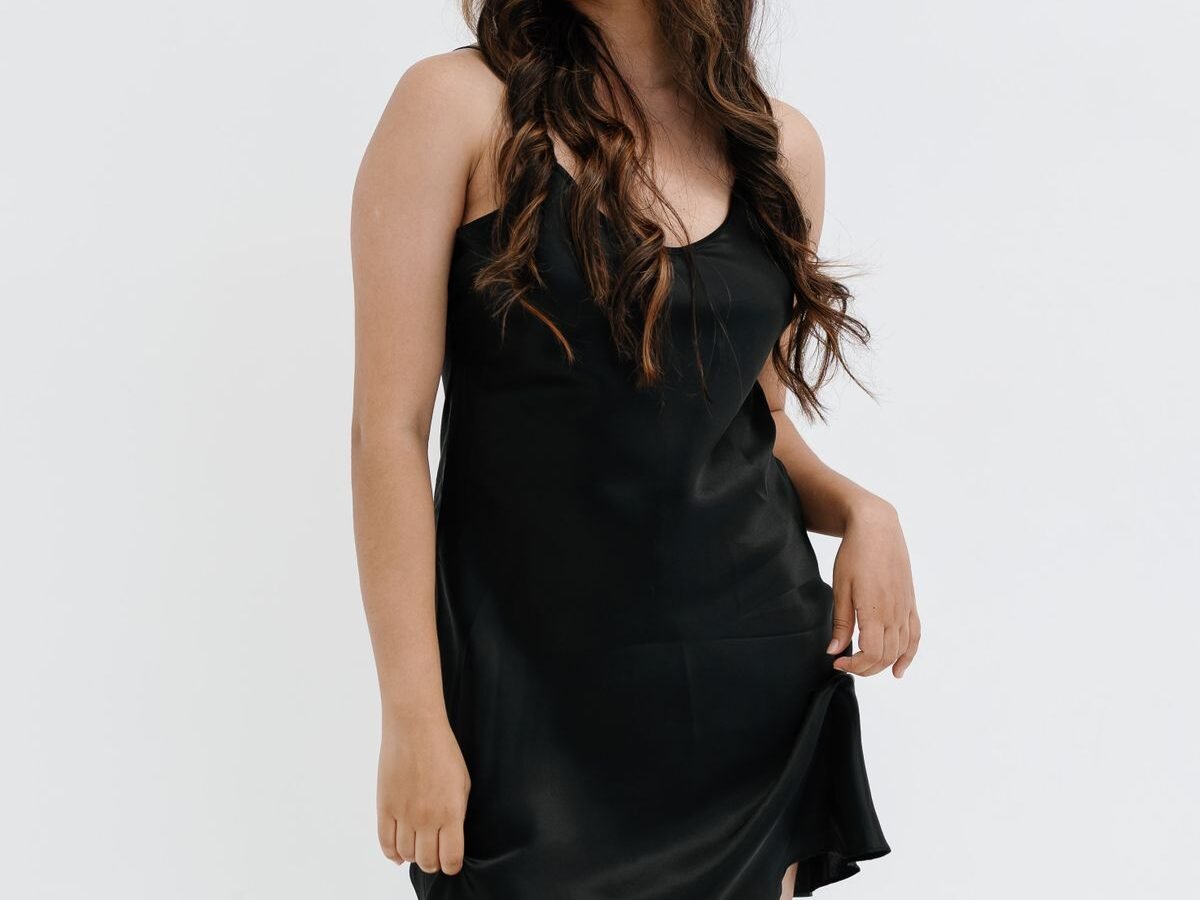
Some people are famous for being private. Vanity Alpough belongs to the rarer category: known, but genuinely unknowable — a woman whose name circulates in entertainment-adjacent circles while she herself remains almost entirely out of view. And here’s the fascinating thing about that kind of privacy: it becomes a style statement all on its own. In an age of total visibility, choosing invisibility is the boldest fashion choice there is.
Quick Facts
- Known for: Entertainment-adjacent figure who maintains strict privacy
- Style signature: Minimalist elegance — the less seen, the more intriguing
- Color palette: Black, white, and the spaces in between
- Philosophy: Privacy as the ultimate luxury accessory
The Power of Not Being Seen
Let’s be honest about the modern fashion economy: it runs on exposure. Influencers monetize every outfit, celebrities dress for the paparazzi they claim to hate, and “candid” has become the most produced genre in photography. Into this circus steps someone like Vanity Alpough — present in the credits of the culture, absent from its feeds — and the contrast is electric.
Her rare public images suggest a woman who dresses with the confidence of someone who answers to no audience. The looks are minimal and architectural: clean lines, monochrome palettes, nothing decorative for decoration’s sake. It’s fashion reduced to essence — what you wear when the only person you’re dressing for is yourself. For a similar study in restraint-as-power, Erika Tureaud’s quiet consistency works the same minimalist magic.
Minimalism as Identity
There’s minimalism as a trend — the beige Instagram grids, the capsule-wardrobe content — and then there’s minimalism as an actual identity. Vanity Alpough appears to practice the second kind. Her aesthetic reads as considered rather than curated: simple silhouettes, quality fabrics, an almost editorial severity. Black dresses with strong lines. White shirts worn with precision. The kind of wardrobe that would look identical in 1995 or 2035.
This is harder than it looks. True minimalism requires total confidence, because there’s nowhere to hide — no print to distract, no trend to hide behind, no logo to do the talking. Every seam has to earn its place. The women who pull it off share a particular self-possession, and from what little is visible, Alpough has it. Her beauty approach matches: natural, ungimmicked, the face as it is.
It’s also worth noting how this plays in the attention economy. Every fashion week, every awards season, the industry rewards the loudest look — the sheer dress, the architectural experiment, the meme-able moment. Alpough’s hypothetical red carpet would be the opposite of all that: a black column dress, perfect posture, no story needed. In a room full of people screaming for attention, the quietest person is the one everyone ends up watching. Restraint, wielded correctly, is the ultimate power move.
The irony is thick — in refusing the fashion conversation entirely, she’s become one of its more interesting subjects. Mystery is the one thing the content machine can’t manufacture, and she has it in abundance.
What Privacy Teaches About Style
Strip away the mystique and there’s a practical wardrobe philosophy here worth stealing. First: build around a tight, timeless palette — black, white, neutrals — and you’ll never have a “nothing to wear” morning. Second: invest in cut over decoration; a perfectly cut simple dress outperforms a busy complicated one every time. Third: let absence do the work — no visible logos, no trend pieces, no noise.
But the deeper lesson is about audience. Most of us dress for an imagined public — the coworkers, the ex, the algorithm. Vanity Alpough’s style asks: what would you wear if no one was watching? The answer, for her, is apparently the chicest version of herself. That’s not just a wardrobe strategy; it’s a whole way of being. If dressing for yourself resonates, you’ll find the same self-directed elegance in Lesa Tureaud’s quiet grace.
The Wardrobe That Needs No Audience
There’s a final, almost philosophical point to make about this kind of dressing. Most fashion advice assumes an audience — dress for the job you want, the date, the photo. Alpough’s wardrobe assumes none of that, and paradoxically ends up more compelling than most audience-driven dressing. Why? Because clothes worn purely for the wearer carry a different energy: ease instead of effort, conviction instead of calculation.
You can feel the difference even in a single photograph. The audience-dressed person is asking a question — do you like this? The self-dressed person is making a statement — this is me. One seeks validation; the other simply exists. Guess which one photographs better, ages better, and costs less in both money and anxiety. The answer is the whole argument for building a wardrobe around yourself first and the world second.
Who is Vanity Alpough?
Vanity Alpough is a figure connected to entertainment circles who is known for maintaining an exceptionally private public profile, rarely appearing in media or public events.
What is Vanity Alpough’s style?
Stark minimalist elegance — monochrome palettes, architectural silhouettes, and zero decoration. Fashion as essence rather than display.
Vanity Alpough may never give an interview or walk a red carpet, but her style already said everything worth saying: true luxury is privacy, true confidence is simplicity, and the most powerful thing you can wear is the decision not to perform.