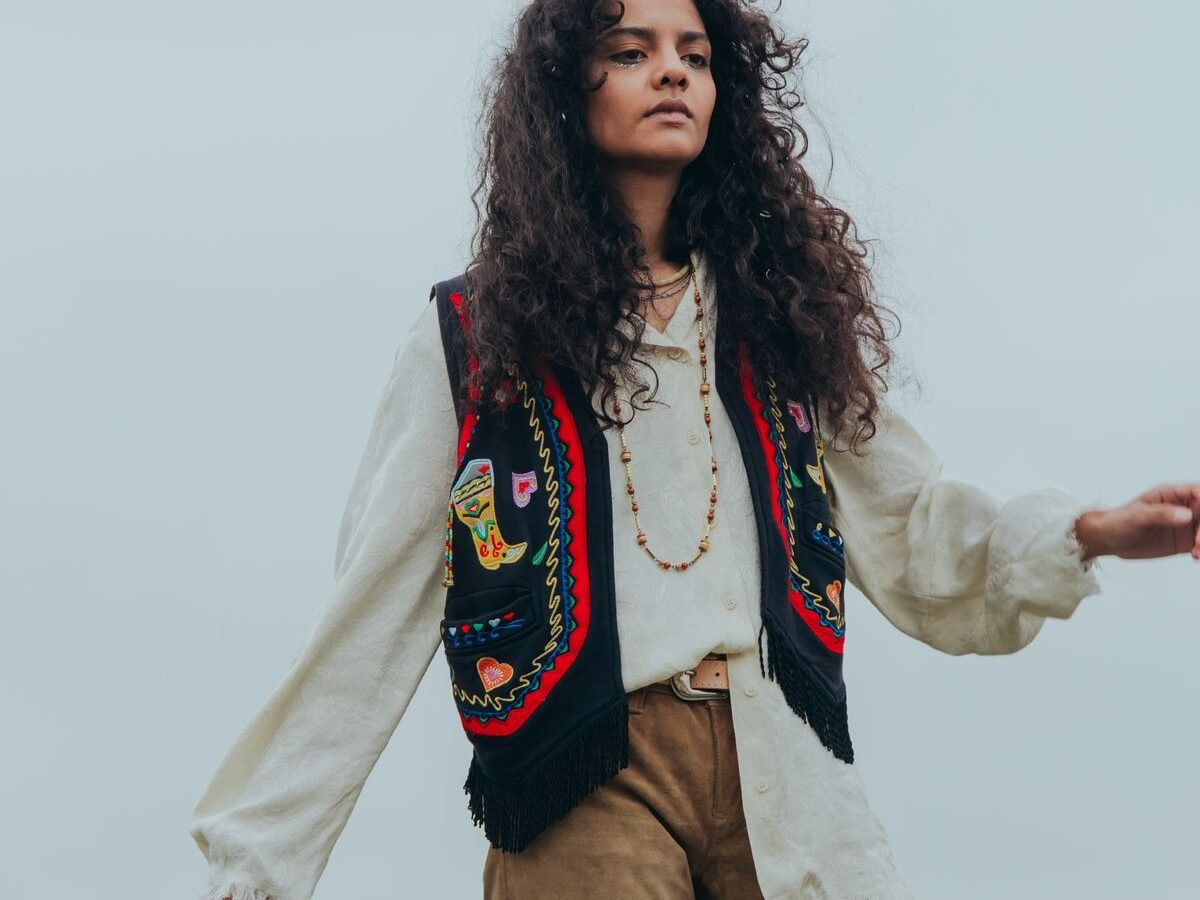
Some fashion stories are about a person. This one is about an entire universe. Mallory Plotnik — wife of the late Grateful Dead bassist Phil Lesh — doesn’t just wear clothes; she wears a whole cultural lineage. Her style is what happens when San Francisco rock royalty meets genuine bohemian spirit: flowing fabrics, earthy textures, and the kind of ease that can’t be bought at a festival pop-up shop, because it was earned over decades of actually living the life.
Deadhead Royalty, Dressed Like It
To understand Mallory Plotnik’s fashion, you have to understand the world she married into. The Grateful Dead weren’t just a band; they were a traveling civilization with its own economy, aesthetics, and dress code. Tie-dye and denim, fringe and turquoise, clothes built for dancing outdoors for four hours — that was the uniform, and it was gloriously unpretentious.
Mallory absorbed that world and refined it. Where the parking-lot version of Deadhead style could tip into costume, hers stayed grounded and genuinely beautiful. Flowing maxi dresses, soft knits, layered textures — the bohemian vocabulary spoken fluently rather than phonetically. She’s the difference between someone who bought the look and someone who is the look. For another take on music-adjacent bohemian style done authentically, the spirit here rhymes with Zoe Giordano Harrelson’s effortless ease — different scene, same genuineness.
The Anatomy of Authentic Bohemian Style
Let’s break down what makes her version work while a thousand festival imitations don’t. First: fabric. Mallory’s wardrobe favors natural materials with real drape — cotton, linen, soft jersey, things that move when you move. Nothing stiff, nothing synthetic-shiny, nothing that looks like it was designed on a screen. The clothes have a lived-in quality that fast fashion can’t fake, because fast fashion can’t wait ten years.
Second: layering with intent. A long vest over a simple dress, a scarf that actually gets worn rather than displayed, boots that have seen things. Her layers look accumulated rather than assembled — each piece has a history, and the outfit is the sum of those histories. That’s the thing about authentic bohemian style: it’s a timeline, not a trend.
Third: the details are personal, not purchased. Turquoise and silver jewelry, pieces that look collected over decades rather than bought as a set. Hair worn naturally. Makeup minimal or absent. The whole presentation says: I have more interesting things to think about than my outfit, which is precisely why the outfit is interesting.
From the 60s to Now: Why It Still Works
Here’s the remarkable thing — the aesthetic Mallory represents has been declared dead and revived at least four times since the Summer of Love, and her version never looked dated through any of it. Why? Because she was never doing a trend. Trends have expiration dates; ways of life don’t.
When boho went mainstream in the 2000s — the Sienna Miller era, the Coachella industrial complex — the copies looked like costumes because they were. Mallory’s style sailed through untouched, the original article calmly outlasting the reproductions. There’s a deep fashion lesson in that: the people who survive trend cycles aren’t the ones who chase them or even the ones who ignore them — they’re the ones whose clothes were never about the cycle in the first place.
And now, as fashion swings back toward craft, natural fibers, and anti-disposability, her wardrobe looks almost prophetic. The industry spent fifty years trying to manufacture what she just… wore. If timeless-dressing philosophy interests you, Erika Tureaud’s quiet consistency makes the same argument from a completely different wardrobe.
Stealing the Spirit (Not the Costume)
So how do you borrow from Mallory Plotnik without looking like you’re headed to a tribute concert? Take the principles, leave the literalism. Invest in natural fabrics with beautiful drape. Build outfits by layering pieces you actually love rather than buying “boho sets.” Choose jewelry with personal meaning over matching sets. Let your hair and makeup relax.
The real takeaway is philosophical: dress from your actual life and values, and the style takes care of itself. Mallory Plotnik’s fashion works because it’s the honest uniform of a life lived in music, community, and Northern California light. You can’t buy that at a festival. But you can learn from it: authenticity is the only trend that never ends.
Who is Mallory Plotnik?
Mallory Plotnik was the wife of Phil Lesh, the bassist and co-founder of the Grateful Dead, until his passing in 2024. She has been part of the Grateful Dead extended family for decades.
What is Mallory Plotnik’s style?
Authentic bohemian — flowing natural fabrics, thoughtful layering, collected jewelry, and minimal makeup. The genuine article rather than festival fashion.
How can I get bohemian style without looking costumey?
Follow her principles: natural fabrics, pieces with personal history, relaxed layering, and authenticity over literal trend pieces. Let the style reflect your real life.
Mallory Plotnik never had a stylist, a brand deal, or a fashion moment — and that’s exactly why her style matters. In a world of manufactured bohemianism, she’s the real thing: proof that the best-dressed person in any room is usually the one who stopped trying the longest ago.