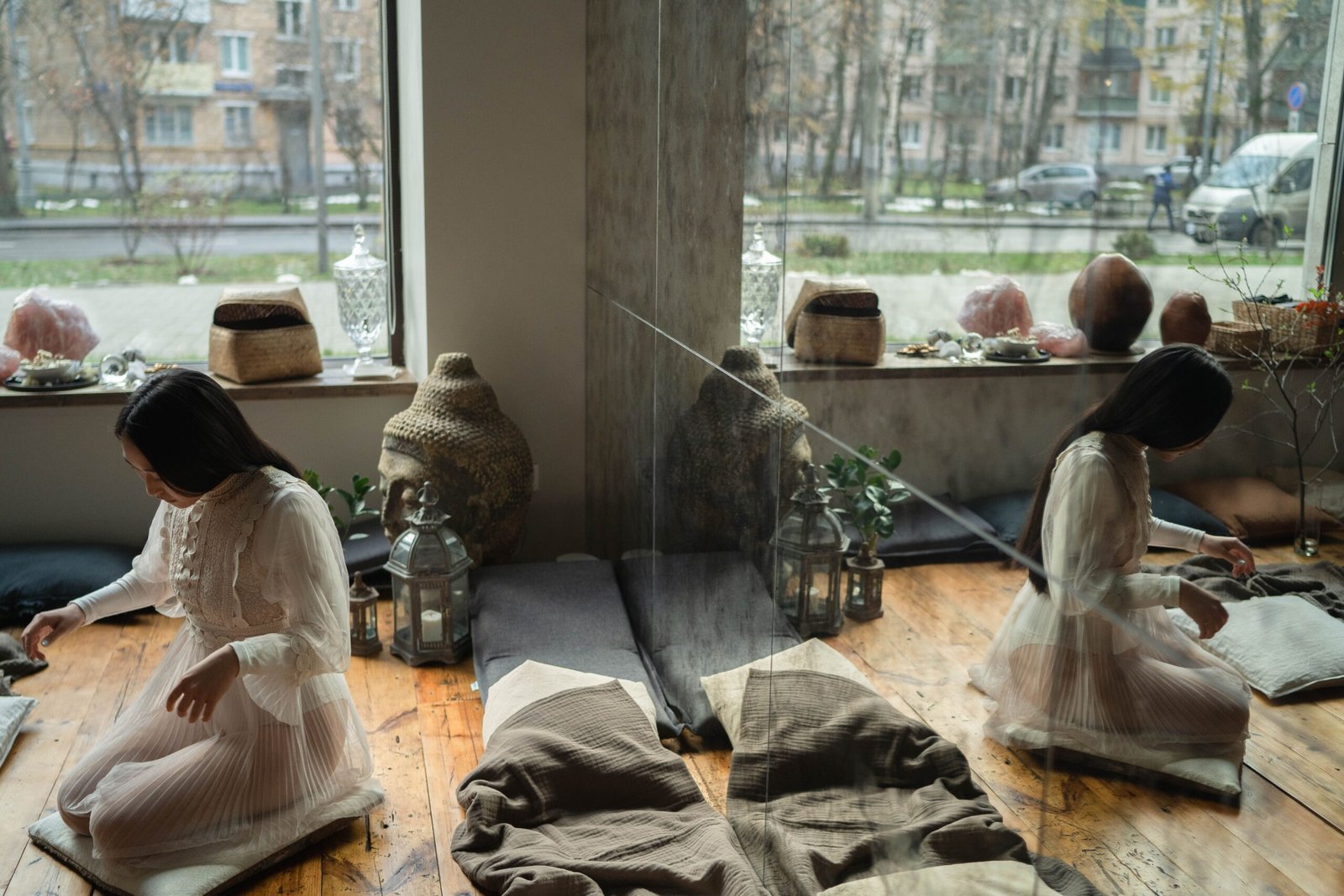
There is a moment that most people recognise — the quiet pause between what happens to you and how you respond. That brief, often overlooked space is where something profound lives. In ancient South Asian thought, that space has a name. It is called antarvafna.
While the word may be unfamiliar to many in the modern world, the experience it describes is universally human. It is the pull toward something you cannot quite explain. The persistent feeling that a decision you made did not truly belong to you. The quiet knowledge that the version of yourself you show the world and the version that exists inside you are not always the same person.
This article explains what antarvafna actually means, where it comes from, how it connects to modern psychology and daily life — and most importantly, how you can begin practising it in a way that genuinely changes how you think, decide, and live.
What Does Antarvafna Actually Mean?
The word antarvafna is rooted in South Asian linguistic and philosophical tradition. It is a compound of two elements. The first — antar — is a Sanskrit-derived term used across Hindi and multiple South Asian languages to mean inner, interior, or within. It refers not just to a physical space but to the psychological and spiritual interior that exists beneath the surface of behaviour and thought.
The second part of the word gestures toward essence, inner desire, feeling, or the voice of personal expression. Together, antarvafna points to something that can be translated as the voice of the inner self — the experience of one’s own emotional depths, persistent drives, and the values that shape choices even when they are never spoken aloud.
Put simply, antarvafna describes what is happening inside a person at the level that is rarely expressed — the quiet pull toward certain choices, the resistance to others, and the emotional undercurrents that run deeper than surface moods or fleeting preferences.
Where Does Antarvafna Come From?
The concept draws from a tradition of inward-looking philosophy that runs through classical Indian thought. Sanskrit literature, including the Upanishads, placed enormous emphasis on the inner world as the site of truth. The premise that understanding the self is the foundation of understanding everything else runs through Vedantic philosophy, Buddhist contemplative practice, and many regional devotional traditions across South Asia.
The Upanishads open with the question that antarvafna implicitly keeps asking — Who am I? This is not a question about career titles or social roles. It is a question about the nature of experience itself, and it is one that every thoughtful human being encounters at some point in their life, whether or not they have a name for it.
While the word does not appear in ancient canonical texts under its exact modern spelling, it sits in clear intellectual lineage with classical concepts of self-inquiry and the philosophical tradition of turning attention inward rather than outward to find meaning and direction.
What Competitors Miss — The Antarvafna and Modern Psychology Connection
Most discussions of antarvafna treat it as purely a spiritual or philosophical concept. But modern psychology has arrived independently at many of the same ideas — and understanding that connection makes the practice far more accessible and credible for people who approach the world through a scientific lens.
Carl Jung’s theory of the shadow self describes a repository of suppressed desires, fears, and drives that operate beneath conscious awareness. This aligns closely with what antarvafna describes — the inner experience that exists regardless of whether we acknowledge it. Ignoring this dimension of the self does not make it go away. It simply means it operates without your awareness, influencing your choices in ways you cannot trace or understand.
Humanistic psychology, developed by thinkers like Abraham Maslow and Carl Rogers, centres on the idea that human beings possess an inner drive toward growth and self-actualisation that must be recognised before it can be fulfilled. Intrinsic motivation theory similarly distinguishes between acting from genuine inner conviction versus acting for external reward or social approval — and consistently finds that the former produces better outcomes, greater wellbeing, and more lasting satisfaction.
Research on metacognition — the ability to think about your own thinking — shows that people who regularly reflect on their internal states make better decisions, regulate their emotions more effectively, and demonstrate significantly higher levels of resilience in difficult situations.
Antarvafna is not merely a spiritual concept, then. It describes something that behavioural science has long been attempting to explain through clinical and empirical frameworks.
The 5 Warning Signs You Are Ignoring Your Inner Voice
This is something that competitors completely overlooked — and it is one of the most practically useful aspects of antarvafna for modern readers.
Most people are not ignoring their inner voice deliberately. They simply have not been taught to recognise the signs that they are doing it. Here are the five most common signals:
You make decisions quickly to avoid discomfort. When the idea of sitting with a difficult choice feels more unbearable than simply picking an answer and moving forward, that is a sign that genuine inner reflection has been replaced by avoidance.
You feel a persistent, low-level dissatisfaction you cannot explain. Everything looks fine from the outside — the job, the relationships, the routine — but something feels hollow or slightly off. This gap between outer appearance and inner experience is one of the clearest signals that your inner voice has been suppressed for too long.
You regularly say yes when you mean no. People-pleasing and the inability to set boundaries are not just personality traits. They are often symptoms of disconnection from what you actually want and value.
You feel exhausted in ways that sleep does not fix. The fatigue of performing a version of yourself that does not align with who you are is a very real and very specific kind of tiredness. It is different from physical tiredness and does not respond to physical rest.
You feel envious in ways that confuse you. Envy, when examined honestly, almost always points toward something you genuinely want but have not allowed yourself to acknowledge. Antarvafna treats envy not as a character flaw but as useful data about your inner world.
Antarvafna vs Regular Meditation — What Is the Difference?
This is another dimension that most existing articles do not address clearly — and it is a distinction worth making.
Meditation in its most common modern form is primarily about quieting the mind. The goal is often stillness, the reduction of mental noise, and a state of non-attached awareness. This is genuinely valuable — but it is not the same thing as antarvafna.
Antarvafna is active rather than passive. It is not about emptying the mind. It is about directing honest, curious attention toward the contents of your inner world — your fears, desires, values, resistances, and longings — and being willing to observe what is actually there without immediately judging it or trying to change it.
Think of it this way. Meditation is like quieting a room so you can hear what is happening outside. Antarvafna is like turning your attention deliberately toward a conversation that has been happening in that room all along — one you have been too distracted or too afraid to listen to properly.
Both practices support each other beautifully. But they are not the same thing, and understanding the difference helps you use each one more effectively.
How to Practise Antarvafna in Daily Life — A Step by Step Guide
This is what most existing articles on this topic fail to provide — a genuinely practical guide to bringing antarvafna into everyday life without needing a meditation retreat, a philosophical education, or hours of unstructured time.
Step 1 — Create a daily pause of five minutes
The single most accessible entry point into antarvafna is creating one intentional pause per day. This does not need to be a formal meditation session. It can be five minutes in the car before you go inside after work, five minutes with a cup of tea before the household wakes up, or five minutes before you open your phone in the morning. The content of this pause is simple — you sit quietly and ask yourself one honest question. How am I actually feeling right now? Not how you think you should be feeling. Not how you would describe yourself to someone else. How you are actually feeling in this moment.
Step 2 — Keep a reflection journal — but differently
Most journalling advice tells you to write about what happened. Antarvafna journalling focuses on what was happening underneath what happened. After any significant event — a difficult conversation, an unexpected emotional reaction, a decision that felt wrong even if it looked right — write for five to ten minutes about what you noticed internally. What was the feeling beneath the feeling? What did you want to say but did not? What does your reaction tell you about what you actually value?
Step 3 — Observe your resistance
One of the most reliable guides to your inner world is noticing what you consistently resist or avoid. Resistance is not random. It almost always points toward something — a fear, an unacknowledged desire, or a belief about yourself that you have not yet examined. Antarvafna treats resistance as a doorway rather than an obstacle.
Step 4 — Delay reactive responses
When you feel a strong emotional reaction — irritation, anxiety, shame, excitement — practise creating a small delay before responding. This is not about suppressing the emotion. It is about observing it long enough to understand what it is telling you before it drives your behaviour. Even a breath or two creates enough space to shift from reaction to response.
Step 5 — Review your decisions weekly
Once a week, take ten minutes to review the decisions you made that week — not to judge them but to understand them. Ask yourself honestly what motivated each significant choice. Was it genuinely what you wanted? Was it driven by fear of what others would think? Was it an avoidance of discomfort? This kind of regular honest review gradually builds the self-knowledge that antarvafna is designed to cultivate.
Antarvafna and the Tension Between Inner and Outer Life
One of the most useful things antarvafna does as a concept is name a tension that many people feel but struggle to articulate — the gap between inner experience and outward presentation.
Social life, professional environments, and especially social media platforms exert constant pressure on people to curate how they appear rather than examine how they feel. The result is a kind of internal-external mismatch — a person who looks successful, put-together, and confident while privately feeling uncertain, disconnected, or quietly unfulfilled.
Antarvafna addresses this by redirecting attention to the internal side of that equation. Not to abandon external life or responsibilities, but to ensure the inner life is not simply overridden by them. A person who regularly practises antarvafna does not necessarily share more of their inner world publicly. But they live with far less internal conflict, because they are no longer pretending to themselves that everything is fine when it is not.
The Real Benefits of Antarvafna — What Regular Practice Actually Produces
Research on mindfulness, reflective practice, and metacognition consistently shows measurable improvements in the following areas when people cultivate regular inward attention:
Better decision-making quality — people who understand their own motivations and values make choices that are more consistent with what actually matters to them, and report significantly less decision regret over time.
Improved emotional regulation — the ability to observe an emotion before reacting to it is one of the most reliable predictors of mental health and relationship quality.
Greater stress resilience — people who practise regular reflection are better able to maintain perspective during difficult periods because they have a stronger relationship with their own inner resources.
Clearer sense of personal values — many people operate according to values they absorbed from their environment without ever consciously choosing them. Antarvafna practice surfaces these inherited values and allows people to evaluate whether they are genuinely their own.
Stronger relationships — the capacity to understand your own inner world directly improves your ability to understand the inner worlds of others. Empathy is not an abstract quality. It is cultivated by practising honest self-observation first.
Reduced anxiety — a significant portion of chronic anxiety comes from the dissonance between who we are presenting ourselves to be and who we actually are. Closing that gap through honest inner work reduces anxiety in ways that distraction and avoidance simply cannot.
Final Thoughts
Antarvafna is not a technique that requires special conditions or exceptional circumstances. It does not demand retreat from the world or years of dedicated study. It requires only a willingness to look honestly inward — to treat your own inner life as something worth paying attention to, something that contains information you need, and something that deserves the same careful curiosity you might direct toward anything else that matters to you.
The practices described in this article are simple. Their effects, sustained over time, are anything but. The gap between the person you appear to be and the person you actually are is not fixed. Antarvafna is the practice of closing it — one honest moment of inner observation at a time.