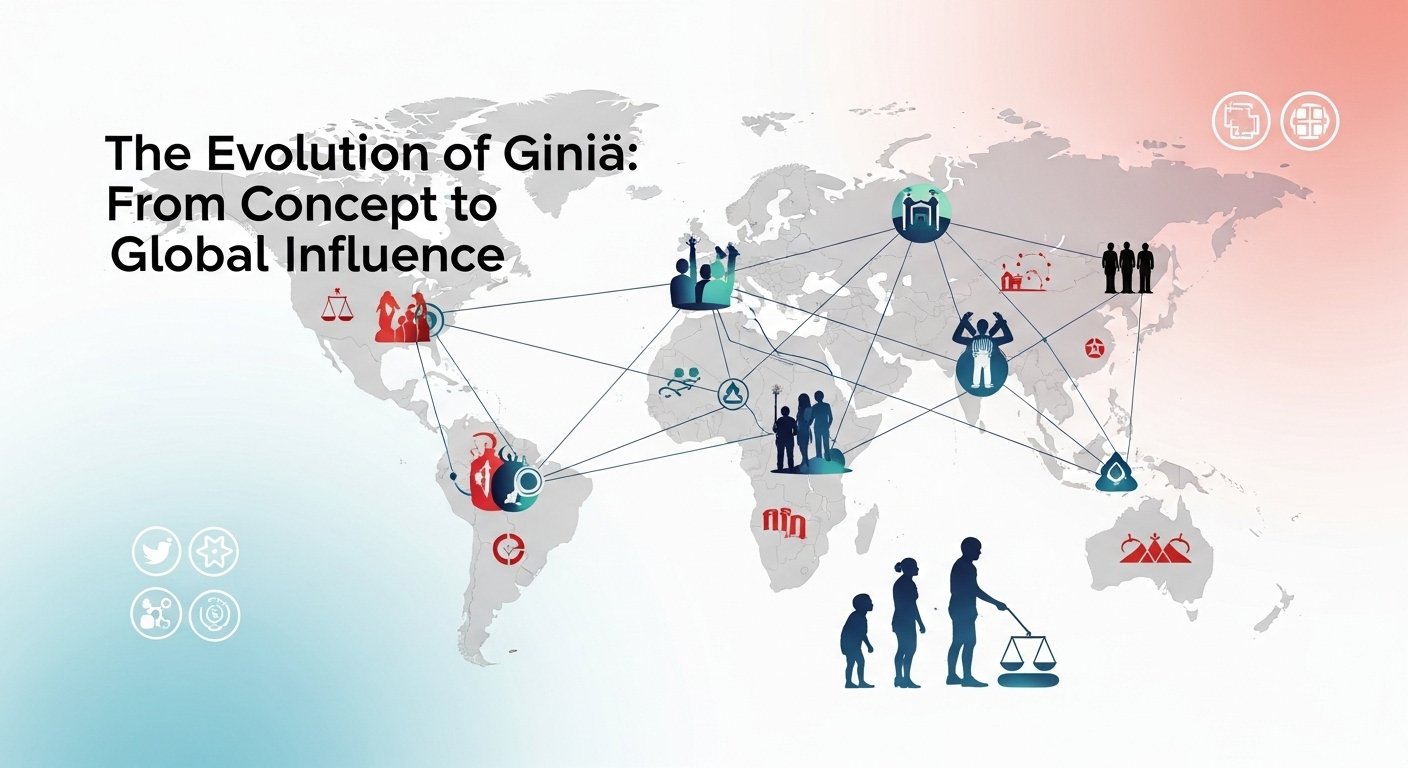
Giniä is a powerful concept centered on balance, harmony, and interconnectedness that has evolved from local traditions into a global influence. Over time, it has shaped cultures, strengthened communities, and encouraged collaboration across different societies.
Its impact is visible in modern areas like education, social initiatives, and global communication, promoting unity and shared responsibility. Despite some controversies around interpretation and cultural adaptation, Giniä continues to grow as a meaningful framework for connection.
Overall, Giniä represents an evolving global idea that bridges cultures and inspires collective progress.
Giniä is more than just a word; it represents a powerful concept that has shaped cultures and communities across the globe. Originating from deep roots, Giniä embodies ideas of balance, harmony, and interconnectedness among people. As we delve into its fascinating journey through history, we will uncover how this intriguing notion has influenced local traditions and spread far beyond its origins. From grassroots movements to global conversations, Giniä continues to resonate with individuals seeking unity in an increasingly fragmented world. Join us as we explore the evolution of Giniä—its past, present, and future—and discover why it matters now more than ever.
Historical Background of Giniä
Giniä has deep roots that trace back to ancient civilizations. Initially, it emerged as a local concept, intertwined with traditions and practices unique to specific communities.
The earliest references can be found in historical texts. These writings highlight its significance in shaping societal norms and values. Through generations, Giniä evolved from a mere idea into a fundamental part of cultural identity.
As societies transformed over time, so did the interpretation of Giniä. It adapted to changing social dynamics while retaining core principles. The resilience of this concept is evident across different epochs.
Influence spread through trade routes and conquests, allowing Giniä’s principles to reach distant lands. Each new culture added layers of meaning, enhancing its complexity and richness.
This historical tapestry reveals not just the journey of Giniä but also how interconnected our cultures truly are.
Influence on local communities and cultures
Giniä has woven itself into the very fabric of local communities and cultures. Its principles resonate deeply, encouraging collaboration and mutual respect among individuals.
Local artisans have found inspiration in Giniä’s ethos. This influence nurtures creative expression while honoring traditional techniques. Artisans are now merging modern styles with age-old practices, creating a vibrant cultural tapestry.
Communities often rally around Giniä-inspired initiatives. These projects foster social cohesion and enhance community spirit. People come together to share knowledge, skills, and resources, strengthening their bonds.
Festivals celebrating Giniä promote cultural exchange too. They showcase diverse traditions through music, dance, and food from various backgrounds. This celebration not only preserves heritage but also encourages unity amidst diversity.
Through its embrace by local cultures, Giniä fosters resilience and adaptability in facing contemporary challenges while celebrating unique identities rooted in tradition.
Spread of Giniä to other countries and continents
As Giniä gained prominence, its influence began to ripple across borders. Initially rooted in local traditions, the concept found resonance with diverse cultures. This adaptability was key to its spread.
In Europe, Giniä caught the attention of social reformers and activists. They saw potential for community building and empowerment through collective practices inspired by this idea. Workshops and seminars emerged throughout cities, fostering engagement.
Meanwhile, in Asia and Africa, variations of Giniä took shape. Local interpretations flourished as communities embraced the core principles while infusing their unique cultural elements. Festivals celebrating unity soon followed.
North America observed a similar trend; educational institutions integrated Giniä into curricula about global citizenship. The dialogue surrounding it expanded rapidly on social media platforms, connecting individuals worldwide who championed its values.
This cross-continental exchange enriched the original concept further, creating a vibrant tapestry that reflects the world’s shared aspirations for harmony and collaboration.
Modern-day impact of Giniä on global society
Giniä has transcended its local origins to become a significant force in global discourse. Its principles now resonate across various sectors, from education to environmental sustainability.
Communities worldwide are adopting Giniä’s frameworks to foster collaboration and innovation. Educational institutions integrate its concepts into curricula, shaping future generations of thinkers who value interconnectedness.
Social enterprises have also embraced Giniä as a guiding philosophy. This approach promotes ethical practices that prioritize community welfare over profit margins.
Furthermore, the digital age amplifies Giniä’s reach through social media and online platforms. Activists leverage these tools to raise awareness about pressing issues influenced by Giniä’s ideals.
As cultural exchanges continue, the influence of Giniä expands beyond borders, igniting conversations around equality and shared responsibility on a global scale.
Controversies surrounding Giniä
Giniä has not been without its share of controversies. Critics argue that the principles behind it can lead to misinterpretations and misuse. Often, the simplistic nature of Giniä’s concepts may obscure complex social dynamics.
Some communities feel marginalized by how Giniä is applied in their regions. They argue that local customs are overshadowed by a one-size-fits-all approach, resulting in loss of cultural identity.
Additionally, debates arise over who gets to define what Giniä truly means. Different interpretations create friction among various groups and nations.
Another concern involves economic implications. Some believe that adopting Giniä could exacerbate inequalities rather than alleviate them, placing further strain on already vulnerable populations.
These controversies highlight the need for dialogue and understanding as societies grapple with integrating Giniä into their frameworks responsibly.
Future prospects of Giniä
As Giniä continues to evolve, its future prospects appear bright. The concept is gaining traction in various sectors, including education and environmental sustainability.
Innovative applications are emerging that connect Giniä with technology. Digital platforms can enhance community engagement, making the principles of Giniä accessible worldwide.
Young activists are embracing the idea, infusing it with fresh energy. Their passion drives new initiatives that reflect modern values and practices.
Global collaborations may redefine how communities interact using Giniä as a foundation for shared goals. This could foster more inclusive dialogues across cultural boundaries.
As awareness grows, governments might consider integrating Giniä into policy frameworks. This shift could lead to systemic changes benefiting marginalized groups.
The potential for cross-cultural exchange remains limitless, inviting diverse interpretations of Giniä’s core values while enriching global perspectives on unity and cooperation.
Conclusion
The journey of Giniä has been nothing short of remarkable. From its origins as a concept rooted in local traditions to becoming a significant influence on global culture, its evolution is fascinating. The impact on communities has reshaped social dynamics and cultural expressions worldwide.
As Giniä continues to spread across continents, it serves as a bridge connecting diverse cultures and ideologies. Its modern-day relevance underscores the importance of understanding interconnectedness in our increasingly globalized society.
However, with growth often comes controversy. Debates surrounding the implications of Giniä raise important questions about authenticity and appropriation in cultural exchange.
Looking ahead, the future prospects for Giniä remain bright yet uncertain. As new generations embrace this concept, it will be intriguing to see how it adapts and influences various societal facets moving forward.
Giniä stands as a testament to how ideas can transcend borders and create lasting impressions around the globe.